Stay Awesome

Updates & News
APRIL 2026

UPDATES FOR ALL
Goodbye National Protocols! Hello Vaccine Group Directions! What am I on about? A very useful webinar explaining this in detail can be found at the bottom of this page on SPS. And here is the COVID-19 one!! Get a brew and a biscuit before you click the link.
In case you missed it due to buying Easter eggs (understandable, I did too), also see the vaccination requirements in the updated Network Contract Directed Enhanced Service. It has been updated to include requirements for PCNs to ensure that eligible care home residents are identified and offered flu vaccines. While PCNs are not required to deliver the vaccinations themselves, they must have arrangements in place to ensure residents are offered vaccination. And the Mandatory Network Agreement has been amended to remove the exclusion of Adult Influenza and COVID‑19 vaccination from collaborative delivery, meaning practices can now work together to deliver the seasonal vaccination Enhanced Service under the Network Contract DES.
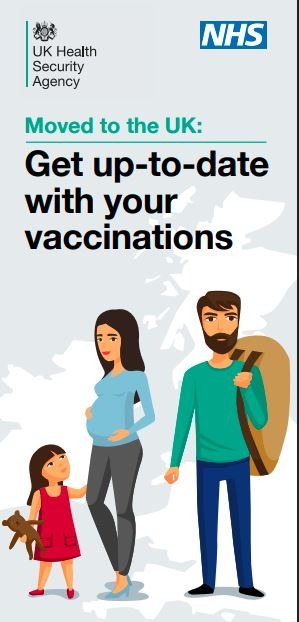
1st April: Migrant health guide updated. Main messages: New migrants to the UK may be at increased risk of certain infections. Healthcare practitioners should provide new migrants with the migrant immunisation information leaflet which advises migrants on the need to register with a GP to get up to date with their routine vaccinations. We should always ask new migrants about their vaccine history and assume that patients aren’t immunised, unless they can give a reliable history of vaccination. Individuals do not need to provide proof of identity, address or of immigration status in order to register with a GP practice to access immunisations. This also applies to asylum seekers, refugees, homeless patients or overseas visitors, whether lawfully in the UK or not.
1st April: Well worth a re-read of chapter 11 in the the green book now it's had a revamp.
13th April: The COVID Spring boosters have begun! Good luck with your clinics :-) NHS England uses the most recent records to invite those eligible for vaccination but, as you are probably finding, information in these records may no longer be relevant if the health condition has resolved or the diagnosis or medicines have changed. Remember to encourage people to check if they are eligible before booking by checking the list on the NHS.uk website.
13th April: This document has had a tweak: Information for healthcare practitioners on delivering the pneumococcal vaccination programme for older adults and individuals in a clinical risk group. Updated with guidance on PCV13 given in error to those aged 2 years and above, and clarification of PCV21 antigen content.
15th April: Also, why not take the chance to re-read the measles. mumps, and rubella Green Book chapters now they have been edited (and re-published) to incorporate MMRV...
...And while we are on measles...Nearly 20 million lives saved in Africa through measles vaccinations
16th April: Mega sad :-( and a good reminder of being vigilant about this horrible disease (especially in the absence of a routine vaccine programme for all): Five newborn babies die from mpox in Pakistan.
16th April: Vaccine update is here. I won't repeat the details here so have a good read! Lots of useful reminders and updates in there. Here are the 'headlines':
More in there about VGD's and the changed medicine regulations.
More about the RSV expansion and reminders of some key documents and guidance.
Some Green Book chapter updates
ImmForm info and reminders and vaccine supply updates
More about the Pneumococcal vaccine change and vaccine presentation (PCV20 has no needles included just FYI - still PFS though)
Same kind of updates and reminders for MMRV
Goodbye to Menitorix from national stock and some final goodbyes to the flu season
Rabies vaccine shortages- it mentions Bavarian Nordics' Rabipur is available with restricted supply until early April and Sanofi's Verorab is available to order with some restrictions – capped at 50 doses per month for wholesalers.
22nd April: Bird flu vaccine trial against potential pandemic strain begins
This month it's second MenB dose time for the eligible Kent students. It is important that everyone who had dose one is given their second dose from four weeks after the first. For those who were offered the MenB vaccine and have not yet received their first dose they remain eligible until 8 May. For students who have returned to university, they will be able to access their second dose at vaccination clinics which are arranged in the local area. For those students who have not returned to the university, they should access vaccination at their own GP practice.
30th April 2026: Resources and information have been published relating to the UKHSA's investigation of the meningococcal bacteria carriage amongst the students aged 18 to 24 in Kent which will be taking place from May 2026.
NHSE has now published the GP additional guidance for seasonal vaccinations 2026/27. This provides information on recording COVID-19 and influenza vaccination events and payments, including where practices are collaborating in their PCNs. In previous years this guidance has only covered the influenza programme. For 2026/27 it has been expanded to cover both the COVID-19 and influenza programmes.
CHILDHOOD IMMUNISATION NEWS
6th April: Emergency jabs after 100 children die of suspected measles in a month in Bangladesh. About a third of those infected in the recent outbreak were under nine months old. A painful reminder about vaccines protecting via herd immunity as well as directly.
7th April: Speaking of measles, this MMRV and MMR vaccination training slide set has been updated. I've posted a good little video in purple below, which goes into measles a bit - with a thought experiment on what might happen if we didn't vaccinate against measles and a comparison of the risk/benefit.
14th April 2026: New research highlights strong benefits of HPV vaccines beyond cervical cancer. For example, Men and boys who received the HPV vaccine from ages 9 to 26 were nearly 50% less likely to develop cancers of the head and neck, esophagus, anus, or penis. A study published in December found that HPV vaccine prevent precancers of the vagina and vulva. Two recent studies suggest that HPV vaccines have created herd immunity, which occurs when vaccinations lower levels of viruses in a population enough to protect even unvaccinated people.
17th April: Encouraging news story. "RSV maternal vaccine cuts baby hospital admissions by up to 85%, Largest real-world study in England confirms premature infants protected by vaccination." The study followed nearly 300,000 babies born between September 2024 and March 2025, representing around 90% of all births in England during this period. More than 4,500 hospitalisations occurred in this cohort, the vast majority in infants whose mothers had not been vaccinated.
TRAVEL HEALTH NEWS
Registration is now open for CISTM20! It's in Bangkok, Thailand from 2–5 May 2027, where clinicians, researchers, educators and public health professionals from around the world will gather for another milestone event.
A new study led by the Harvard T.H. Chan School of Public Health found that Anopheles darlingi mosquitoes, a leading malaria vector in South America, are evolving resistance to insecticides, creating serious challenges for malaria control.
Virus with links to yellow fever discovered in Scotland for first time (Usutu)
Rabies advice from NaTHNaC amidst the shortage... one of the recommendations is to consider an alternative licensed regime (I.E. 0,7d). A sensible approach from an immunity perspective. Lots of evidence for two dose schedules. See this blog for why it's not considered a 'standard' UK approach (albeit when we have plentiful supplies).
25th April: On World Malaria Day (25 April), the WHO joins partners to launch the campaign: "Driven to End Malaria: Now We Can. Now We Must". Since 2000, 2.3 billion cases and 14 million deaths have been averted. To date, 47 countries have been certified malaria-free (of which two in 2024 and three in 2025), while 37 countries reported fewer than 1000 cases in 2024... More like this to come I hope! NaTHNaC explores this further here.
A sad reminder of why packing sterile needles in your medical kit is always a GOOD IDEA!! BBC Eye investigates a hospital linked to outbreak of HIV among children in Pakistan. And read more here too: Hospital at centre of child HIV outbreak caught reusing syringes in undercover filming.
Chikungunya therapy shows promise in first-in-human study
Don't forget the 'lower risk' places!! Hepatitis A is on the rise in Italy: Lazio, Campania, and Puglia are the regions with the most cases. Also CDC issues health warning after outbreak of respiratory diphtheria in Australia.
ADULT IMMUNISATION NEWS
6th April. Just published (but dated 18th March)- could there be another RSV expansion for 64-74yrs? RSV immunisation programme: JCVI advice, 18 March 2026. Statement setting out the findings from JCVI's initial considerations on RSV vaccination in those with underlying health conditions and advice on clinical risk groups for RSV.
2nd April: Shingles uptake and coverage report published (adults in England eligible September 2025 to November 2025 and vaccinated to end of January 2026). Coverage in those aged 66 (33.3%) and 71 (44.6%) is slightly higher than Q1 coverage in those who turned 66 and 71 in 2024 to 2025. Coverage has continued to increase over time in those aged 67 and 72, reaching 45.4% and 56.5% respectively. In the first 4 months of being eligible, so far uptake of Shingrix dose 1 was 18.8% in those who turned 65 in Q1 of 2025 to 2026, uptake of Shingrix dose 1 was 27.0% in those who turned 70, coverage of Shingrix was 26.6% for dose 1 and 20.4% for dose 2 in those who turned 50 and over with severe immunosuppression, and coverage of Shingrix was 2.9% for dose 1 in those who turned 18 to 50 with severe immunosuppression.
2nd April: Prenatal pertussis vaccination coverage in England from October to December 2025 has been published too. This quarterly report evaluates prenatal pertussis vaccine coverage for women who delivered from October 2025 to December 2025, the third quarter of the 2025 to 2026 financial year. The main findings were that:
coverage was 74.8% in October 2025, 75.3% in November 2025 and 75.1% in December 2025
coverage for quarter 3 was 75.0%, which was 7.5 percentage points higher than quarter 3 coverage in the previous financial year
coverage by Commissioning Region ranged from 67.1% in London to 82.4% in the South West
My reading list this month:
The Horrors That Could Lie Ahead if Vaccines Vanish - VERY SOBERING
The US is driving a public health emergency of international concern - Interesting perspective. While a PHEIC has never been declared due to the political actions of a single country, the overriding consideration is risk. The recent U.S. decisions have greatly amplified the risk of international disease spread, which they argue this meets the criteria for a PHEIC under International Health Regulations. The IHRs define a PHEIC as an "extraordinary event" that creates a "public health risk to other states through the international spread of disease."
Beyond the guidelines: real-world challenges in rabies post-exposure prophylaxis
Selfie-related deaths using web epidemiological intelligence tool (2008–2021): a cross-sectional study (restricted access)
Flu vaccination may cut heart attack and stroke risk after infection
IAVI begins first-in-human Phase 1 trial of single-dose Marburg virus vaccine candidate
Time requirements of pre-acclimatization at simulated altitude to prevent acute mountain sickness. Results: Findings from seven controlled studies using repeated intermittent exposures to simulated altitude were included. The cumulative pre-acclimatization time ranged from 7 to 104 hours; altitudes ranged from 2200 to 5000 m. The AMS risk after pre-acclimatization decreased by 12–73% compared to controls, with the degree of reduction depending mainly on the duration at simulated altitude. Extrapolating from these data indicates that, within the analysed altitude range, ~200 hours of pre-acclimatization may reduce the subsequent AMS risk to nearly zero.
Gluten in local Asian cuisines and recommendations for travellers
TB vaccine candidates offer limited protection in phase 3 trial - Neither vaccine in the trial provided protection against all TB, pulmonary TB, and latent TB. But VPM1002 showed a vaccine efficacy (VE) of 50.4% against extrapulmonary TB, which occurs when TB spreads beyond the lungs, and Immuvac had a VE of 33.2% against extrapulmonary TB. VPM1002 and Immuvac showed VE of 64.9% and 66.3%, respectively, against extrapulmonary TB in participants with tuberculin skin-test positivity.
Don’t believe headlines saying that vaccine skepticism is widespread